Dear members of the media,
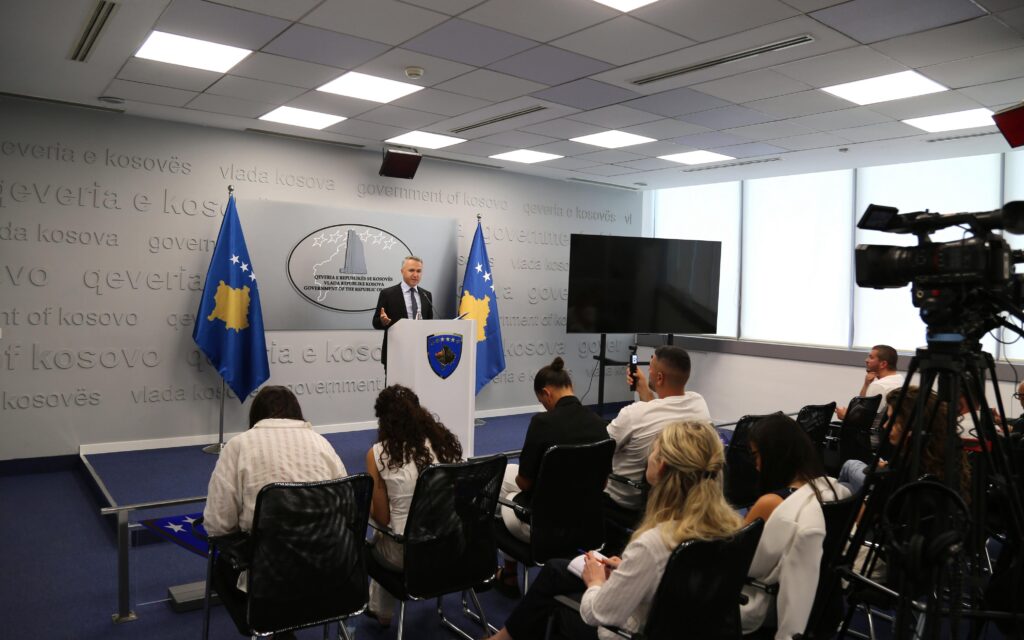
Thank you for attending today’s press conference.
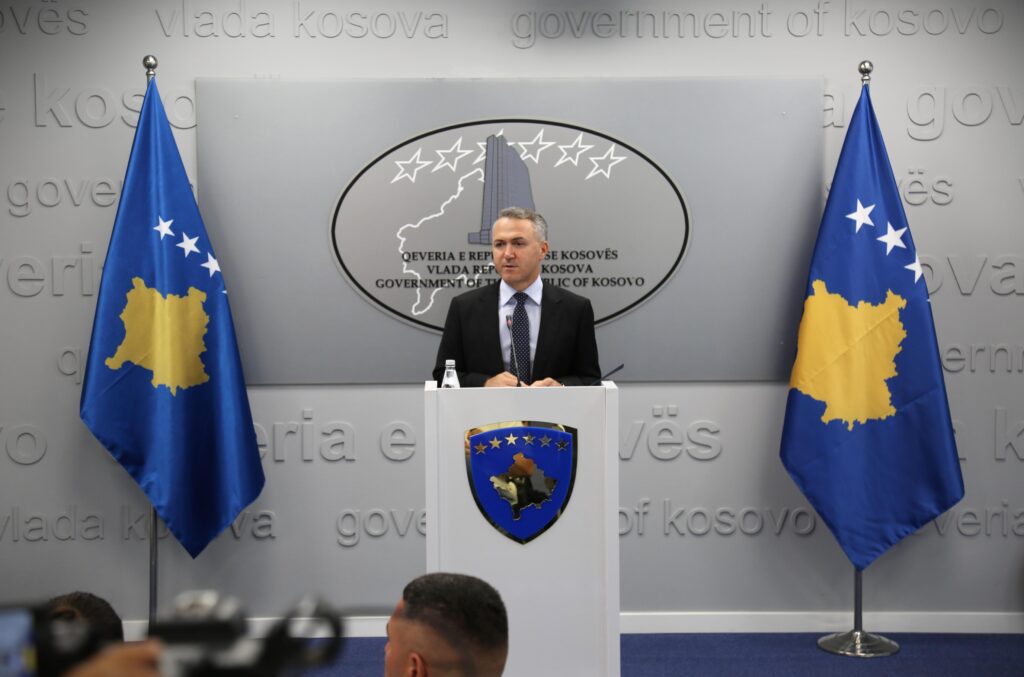
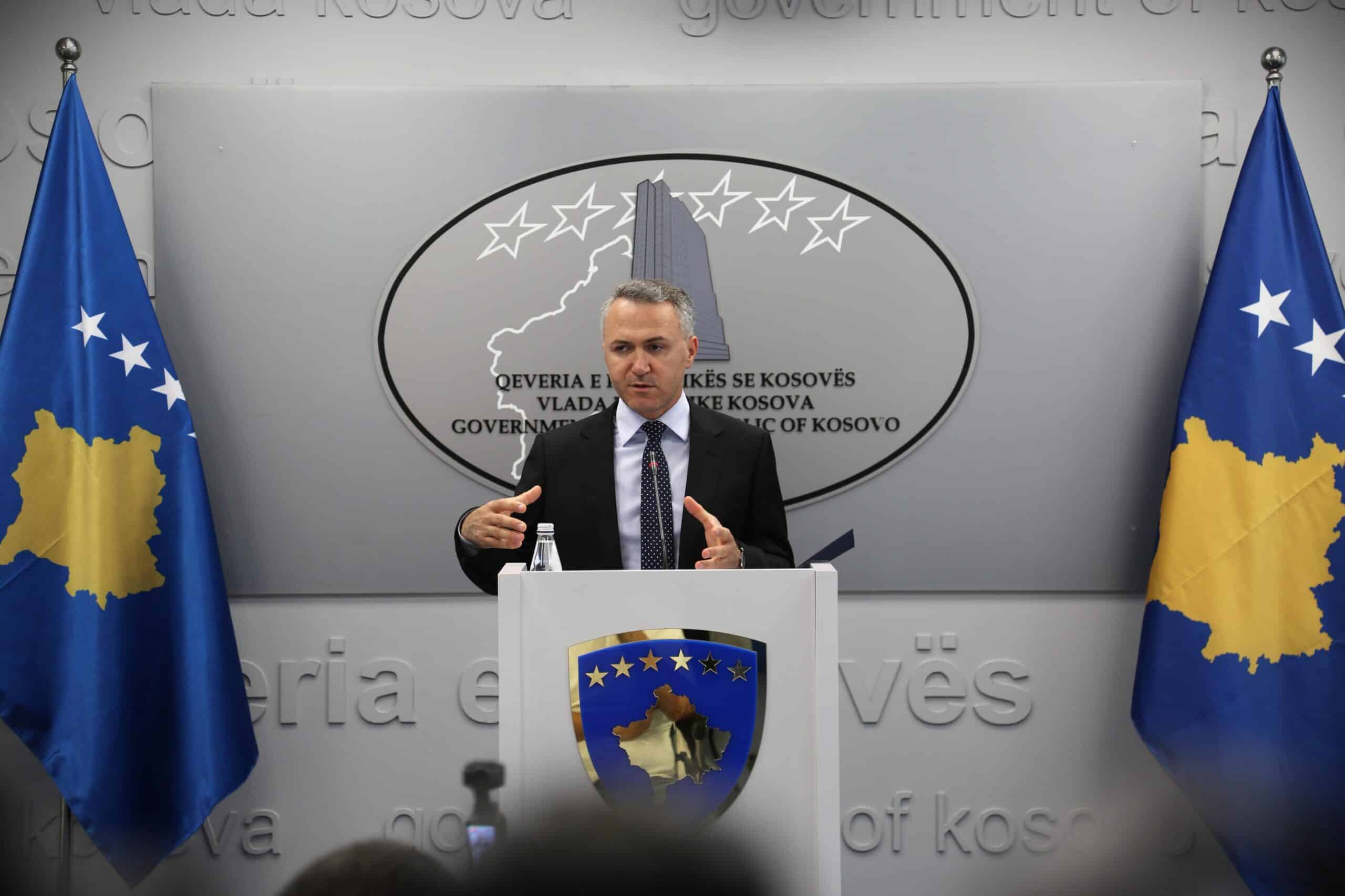
This is my first press conference since my appointment as the Chief Negotiator of the Republic of Kosovo with the European Union and National Coordinator for the Reform and Growth Instrument.
Today’s conference is intended to provide transparency regarding the implementation of the Reform Agenda under the European Union’s Growth Plan for the Western Balkans, specifically the milestones whose original deadline was 30 June 2025 and whose extended deadline (grace period) was 30 June of this year.
I would also like to take this opportunity to provide an overview of the work carried out since the agreements under the Growth Plan entered into force.
As you know, Kosovo was among the first countries in the region to successfully conclude negotiations with the European Union on the reforms under the Growth Plan during the summer of 2024.
This demonstrated our institutional capacities and clearly reflected the Government’s commitment and readiness to advance the reforms related to Kosovo’s accession to the European Union.
Subsequently, without delay, the Government adopted the Reform Agenda on 9 October 2024.
At the same time, the Agreement on the Reform Instrument was approved and submitted to the Assembly for ratification.
The Loan Agreement was not ready for approval at that time, as it had not yet been returned by the European Commission. In December 2024, the Assembly was dissolved and, as a result, the approval of both agreements was left to the next legislature. The outcome of the past year is well known. Neither the Loan Agreement nor the Reform Instrument Agreement was approved throughout the entire year, thereby postponing the commencement of the implementation of the Reform Agenda. Naturally, the Government continued its work, but the formal and official implementation of the agenda was delayed due to the blockage that persisted in the Assembly throughout the year.
Following the certification of the 28 December elections and just two days after the election of the Government, the Government resubmitted both agreements to the Assembly for approval. Accordingly, on 13 February of this year, the Assembly ratified both the Reform Instrument Agreement and the Loan Agreement.
On 19 March, the Government also approved the Decision on the implementation system for the Growth Plan Instrument, under which I was appointed National Coordinator for this instrument.
With this decision, all legal and procedural requirements were fulfilled, and on 16 April we received the pre-financing from the European Union in the amount of EUR 61.8 million. On 23 March, I was appointed Chief Negotiator of the Republic of Kosovo with the European Union.
Both developments demonstrate the Government’s commitment to reforms, as well as our objective of advancing Kosovo’s formal status on its path towards European Union membership, specifically obtaining candidate country status and opening accession negotiations with the European Union.
Upon completing these steps, we established the institutional framework for implementing this instrument. The Office of the Prime Minister, as the lead institution responsible for European integration, also serves as the principal coordinating institution for this instrument, while the Ministry of Finance is responsible for functions related to financing preconditions and the coordination of the internal control and audit components.
We have established the Government’s coordination structures and defined our representation and responsibilities, as the Republic of Kosovo, within the Joint Monitoring Committee with the European Union.
Under the implementation framework, the Government’s coordination structures are organized at two levels: the political level and the policy level. At the political level, we have the Ministerial Council for European Integration, which performs the functions of the Steering Committee and meets at least once every three months. At the policy level, we have the Implementation Committee, which meets at least once every month.
These Government coordination structures are now fully operational, and through them we are working intensively on implementing the Reform Agenda.
On 14 May, we held the first meeting at the political level, chaired by the Prime Minister, during which we discussed the state of implementation of the reforms and ways to accelerate their delivery, particularly those measures requiring approval by the Assembly. During this meeting, we also discussed priority issues relating to investment projects.
Although, by decision, policy-level working meetings are scheduled to take place on a quarterly basis, we are working weekly and daily with the respective ministers to implement the reform measures. All ministers responsible for implementation, as well as the Assembly, have each appointed a dedicated adviser responsible for the Growth Plan, thereby ensuring continuous daily attention to these reforms and strengthening the capacity to facilitate decision-making throughout the implementation process.
At the policy level, as required by the Government Decision, we have held three rounds of Implementation Committee meetings—in April, May, and June—covering all policy areas. During these meetings, together with the implementing institutions, we discussed in detail the progress of reform implementation and the challenges encountered. These meetings have clearly demonstrated that all implementing institutions are ready and generally well prepared to carry out the implementation of the reforms.
On 17 June, we hosted the first meeting of the Joint Monitoring Committee with the European Union in Prishtina. This high-level meeting brought together representatives of the institutions of the Republic of Kosovo, the European Commission, the Member States and development partners, as well as representatives of civil society, trade unions, the business community and local authorities. During the meeting, we discussed the progress made in implementing the reforms, as well as preparations concerning investment projects under the Growth Plan.
Monitoring and reporting are also functioning effectively and without difficulty. In general, the implementing institutions possess the necessary capacities to fulfil all obligations related to internal reporting and the regular six-month reporting to the European Commission. With regard to the latter, Kosovo has fulfilled all of its reporting obligations despite the delays in ratifying the agreements due to the blockage in the Assembly.
To date, we have submitted three six-month implementation reports. On 15 July, we will submit the fourth six-month report on the implementation of the Reform Agenda. This will also be our first official report, and on that occasion, we will submit our first request for the disbursement of funds covering all reform steps implemented by the end of June, namely by yesterday.
According to our preliminary assessment, including the assessments of the implementing institutions, by the end of June this year we had completed 18 reform steps. The remaining measures planned for this year are currently under implementation. Under the Reform Instrument Agreement and the other rules governing the Growth Plan, the final decision rests with the European Commission at the end of the assessment period, which lasts 90 days from the date of submission of our request for the release of funds, which we will submit on 15 July.
In addition, we have already submitted two annual reports to the European Commission concerning the implementation of the objectives of the Growth Plan and the relevant horizontal issues, covering the years 2024 and 2025, respectively. The report for this year will be submitted on 15 January 2027.
This month, we also held the first meeting of the Monitoring Committee for Development Cooperation, an internal inter-institutional structure, where we discussed in greater detail the projects under the Western Balkans Investment Framework (WBIF) that are expected to be financed through the Reform and Growth Instrument. This forum will serve as an early warning mechanism to identify challenges during implementation and adopt corrective measures, while also ensuring that financial opportunities offered by the European Union and other partners are utilized as effectively as possible.
Overall, since the Government adopted the relevant decision and since my appointment, we have held approximately 40 working meetings with the implementing institutions.
I would also like to address SEPA, which forms part of the Growth Plan but not of the Reform Agenda, and which is of exceptional importance to the citizens of the Republic of Kosovo, particularly our diaspora.
Regarding Kosovo’s accession to SEPA (the Single Euro Payments Area), the Assembly initially adopted the necessary legislative amendments comprising three laws, namely the amendments to the Law on Payment Services, the Law on Banks, and the Law on the Prevention of Money Laundering and Combating Terrorist Financing. These amendments were passed on 5 December 2024. However, together with several other laws, they were referred by the Democratic Party to the Constitutional Court, resulting in their implementation being blocked throughout the past year. Until 9 January of this year, the Constitutional Court had not issued its assessment. Although most of the referrals were ultimately dismissed on procedural grounds, the laws remained pending before the Constitutional Court for more than a year.
Following the Constitutional Court’s assessment in January of this year, two of the laws—the Law on Payment Services and the Law on the Prevention of Money Laundering—were resubmitted to the Assembly for approval. Due to the limited time available to the Assembly, the Law on the Prevention of Money Laundering and Combating Terrorist Financing was not adopted.
As you know, the opposition remained in the chamber to block the quorum because they did not vote in favor of expediting the legislative procedure, and as a result this law was not adopted during the April session. In practical terms, this prevented Kosovo from submitting its official application for membership in SEPA.
This law will, of course, be ready for consideration at the next Assembly session, thereby enabling Kosovo to apply for SEPA membership. The benefits are substantial: it is estimated that our diaspora alone would save more than EUR 50 million through Kosovo’s accession to SEPA. Moreover, it is not only the diaspora that would benefit—our businesses would also benefit from significantly more efficient payment transactions.
Now, allow me to address the reform steps whose original deadline was June 2025 and whose extended deadline expired yesterday.
As you know, the Reform Agenda comprises a total of 111 reform steps, which include approximately 300 sub-steps, primarily in the form of secondary legislation. In other words, a single reform step often consists of several sub-steps, beginning with the adoption of primary legislation and followed by the adoption of implementing secondary legislation.
As of yesterday, 62 reform steps were under implementation. Of these, 13 steps had an extended deadline of 30 June 2026, namely yesterday. The remaining 49 steps are also under implementation, with 27 of them having an extended deadline at the end of this year, namely December 2026.
Out of these 62 reform steps, we consider 18 steps to have been completed. Accordingly, on 15 July we will submit our request to the European Union for the disbursement of the corresponding funds.
For the purpose of today’s press conference, particular importance should be attached to the reform steps whose extended deadline expired yesterday. Under the rules governing the Reform Instrument, if a reform step is not completed within the extended deadline, the funds allocated to that particular step are forfeited.
Of the 13 reform steps subject to the extended deadline, 7 are considered completed, while 6 have not been fully implemented. Within these six steps, several sub-steps have nevertheless been completed, primarily those falling within the Government’s competence.
The reform steps that were not completed within the extended deadline are:
1. The Laws on Energy and on Electricity, together with the related secondary legislation;
2. The State Aid Control System, including the Law on State Aid;
3. The National Innovation Council and the Innovation Fund, including the Law on Innovation and Entrepreneurship;
4. The framework legislation and secondary legislation on bankruptcy and insolvency, including the Law on Late Payment Interest;
5. The justice reform legislative package, comprising six laws:
the Law on the Kosovo Prosecutorial Council (KPC) and the Kosovo Judicial Council (KJC);
the Law on the Academy of Justice; the Law on the Disciplinary Liability of Judges and Prosecutors; the Law on Recruitment and Performance Evaluation;
the Law on Integrity Vetting and the Status of Judges and Prosecutors; and the Law on the Administration of the Judicial and Prosecutorial System;
6. The Strategy for Combating Organized Crime, together with the sub-steps forming part of that strategy.
As is evident from this overview, of the 13 reform steps with the 30 June 2026 deadline, 7—or 54%—have been completed. Of the 6 steps that remain outstanding, 5 require the adoption of legislation, representing 83% of the pending measures. The remaining step—the Strategy for Combating Organized Crime—is a Government measure that could not be approved for procedural reasons, as it cannot be adopted by a caretaker Government.
In other words, almost all of the reform steps that were not completed within the extended deadline are a direct consequence of the Assembly’s inability to function and the continuing parliamentary deadlock.
The estimated financial cost of failing to complete these six reform steps on time exceeds EUR 40 million. The exact amount will ultimately be determined by the European Commission, depending on whether it takes into account the sub-steps that have already been completed, while also considering the objective circumstances.
We will continue to monitor all reform steps whose deadline was 30 June, and we will continue to pursue their adoption at the next session of the Assembly, because these reforms serve the interests of our citizens and of the Republic. They will be implemented in any event. Therefore, although they did not meet the deadline linked to EU funding, we will continue to pursue them with the same determination and commitment to ensure that they are adopted as soon as possible at the next Assembly session.
Our focus must now shift to the reform steps whose deadline falls in December of this year. These comprise 61 reform steps, representing a total value of EUR 444 million. Included among them are 22 reform steps with an extended deadline of 31 December of this year, representing EUR 131.7 million.
Accordingly, we need a fully functioning Assembly in order to complete all reform steps that fall due by the end of December this year.
Just as with the June deadline, the December deadline also includes reform measures requiring the adoption of laws by the Assembly or decisions by a government exercising its full constitutional mandate.
As you can therefore appreciate, it is of utmost importance that we have a fully functioning Assembly.
Among the reform steps that were not completed by the 30 June deadline, the Ministry of Economy had already submitted the draft Laws on Energy and Electricity to the Government, which approved them in April. They also passed their first reading in the Assembly. However, they did not proceed to final adoption in plenary, because, as I mentioned earlier, the expedited legislative procedure required the support of a two-thirds majority of members present.
The opposition remained in the chamber to prevent the required two-thirds majority from being reached. This was the exact opposite of the situation during the presidential election process, where remaining in the chamber was necessary to establish the required two-thirds quorum, yet they chose not to remain. In this case, however, where remaining in the chamber effectively prevented the expedited procedure from obtaining the required two-thirds majority, they chose to stay, thereby blocking both the SEPA legislation and the energy laws by preventing the procedural threshold from being met.
All six reform steps that were not completed by the 30 June deadline—namely the five steps requiring legislative approval by the Assembly and the step requiring approval of the Strategy—could have been completed had there not been a parliamentary deadlock. In other words, they would have been completed if the Assembly had been fully functional and the Government had been exercising its full constitutional mandate.
The Reform Agenda is intended to accelerate Kosovo’s path towards membership of the European Union. The Government has demonstrated its full capacity to implement the Reform Agenda on time and to deliver every reform step. However, achieving this requires a functioning Assembly.